
Turning Point Ministries
Turning Point for God, Inc.Lifestyle
4.92.01K Reviews
- Version
- 26.1.7
- Installs
- 500.00K
- Age Rating
- Teen
Screenshots
Our Review of Turning Point Ministries
 Analysis by Appyee
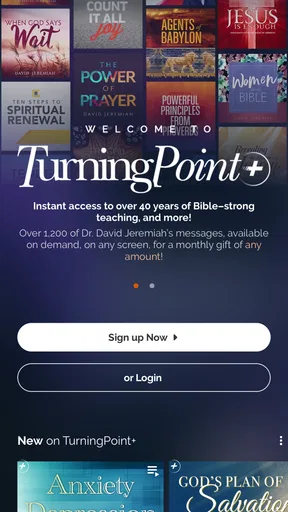
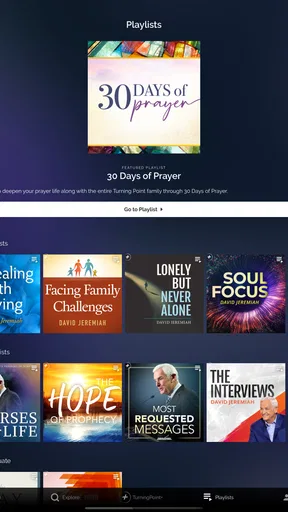
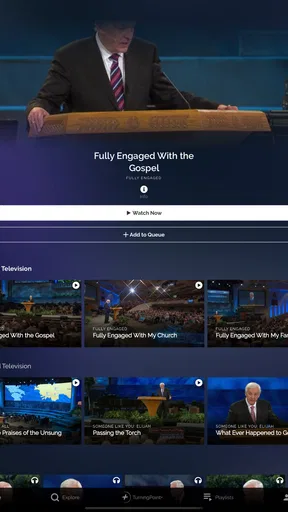
I found Turning Point Ministries most useful when I treated it as a small, dependable part of my daily routine rather than as an app I would open only when I wanted to browse. It is a lifestyle app from Turning Point for God, Inc., built around access to recent messages from Dr. David Jeremiah. That focus makes its purpose immediately clear: it is for people who want Christian teaching available on a phone without searching through several unrelated services first.
My overall impression is positive, especially if you already follow Dr. Jeremiah or want a simple way to keep his messages close at hand. The app is free to download, carries a Teen content rating, and has reached over 500 thousand installs. Its average rating is 4.9 from around 9.2 thousand ratings, which suggests that its focused approach works well for its intended audience. At the same time, I would not recommend it automatically to someone looking for a broad Bible study platform, a general Christian podcast directory, or a highly customizable devotional tool.
How I used Turning Point Ministries in a normal week
My baseline workflow was straightforward. I opened the app when I had a few quiet minutes, looked for the most recent message, and used that as the starting point rather than wandering through a large library. This matters because the app’s main strength is not endless discovery. It is the short path between deciding to listen and actually reaching a message from Dr. David Jeremiah.
A realistic use case is a morning routine. Instead of opening social media while drinking coffee, I could launch the app, choose a recent message, and listen before the day became busy. The same pattern works during a lunch break or while preparing dinner, provided the situation allows attention to spoken content. I found that choosing one message in advance was more effective than repeatedly checking the app without a clear purpose.
The best habit is to give each session a simple intention. I might listen for encouragement, focus on a particular biblical theme, or use the message as a quiet pause in the middle of a demanding day. That small decision prevents the experience from becoming passive scrolling. It also makes the app feel more like a regular part of personal reflection than another media feed.
The app is especially suitable for existing listeners who recognize the speaker’s style and want convenient access to new material. Someone who has already built a habit around Dr. Jeremiah’s teaching will probably understand the app quickly. There is little need to compare many creators or learn a complicated content system. The identity of the app is narrow, and in this case that narrowness is useful.
For a newcomer, the first session may require a little more patience. A person unfamiliar with the ministry may not know which message to choose or what kind of listening routine will be most rewarding. I would suggest starting with the newest available message and then deciding whether the tone, pacing, and subject matter fit your expectations. That is a better test than judging the app after a brief glance at its opening screen.
What I would check before settling into a routine
I would first make sure the current version, 26.1.7, runs comfortably on my device. The listed minimum operating system is Android 7.0, so the app is accessible to users with older Android phones than many newer applications support. That is helpful for people who keep a reliable older handset, although the practical experience can still depend on the phone’s storage, audio hardware, and general condition.
I would also check how the app behaves on the connection I normally use. If I planned to listen away from home, I would avoid assuming that every listening situation would be identical. A sensible approach is to open a message while connected to a stable network, confirm that playback begins properly, and then decide whether the app fits my usual travel or commuting routine. I would not build an important schedule around it until I had tested that pattern myself.
Notifications are another setting worth considering. If the app offers notification controls on the device, I would keep only the alerts that genuinely help me maintain the habit. Too many reminders can turn a useful spiritual routine into background noise. On the other hand, completely silencing every prompt may make it easier to forget the app exists. My preference would be a restrained setup: allow useful updates, but avoid letting them compete with work, family time, or other priorities.
The free price makes trying the app easy, but I would still pay attention before confirming any optional purchase. In-app items range from $4.99 to $49.99 each, so the free starting point should not be confused with every part of the experience being without cost. I would read the purchase screen carefully, decide whether the extra material is relevant to my needs, and avoid buying simply because a message has made me feel enthusiastic in the moment.
That distinction is important for families. The Teen rating gives a general indication of the intended age category, but it is not a substitute for a parent’s judgment about how a particular child should use religious media or make purchases. If the phone is shared, I would use the device’s purchase protections and make sure younger users know which actions are allowed.
Small habits that make the app easier to use
The fastest pattern I found was to stop treating every visit as a search session. When I had already decided to listen, I opened the app and went directly to the newest message instead of browsing aimlessly. This is a modest change, but it removes the most common source of friction in focused media apps: spending more time choosing than listening.
A second useful pattern is to connect the app with a fixed moment rather than an abstract goal. “I should listen more often” is vague. “I will open it after breakfast on weekdays” is easier to remember. The app’s focused subject matter makes this kind of routine particularly natural, because I do not have to decide which of many unrelated categories deserves attention each time.
I also recommend keeping a short personal note after a meaningful message. The app itself should not be expected to replace a journal, Bible, or note-taking tool. I could write down one idea, one question, or one practical action outside the app. This creates a useful division of labor: Turning Point Ministries supplies the message, while my notes preserve what I want to revisit later.
For people who listen with others, a repeatable household pattern can work well. One person can choose the message, everyone can agree on a suitable time, and discussion can happen afterward without turning the app into a complicated group platform. This is a strength of focused content, but it also highlights a limitation: the app is primarily a delivery point, not a complete study environment with every discussion tool a group might want.
Compared with using a general podcast application, this app feels more direct when the goal is specifically Dr. David Jeremiah’s messages. A podcast app may be better if I want subscriptions across many speakers, detailed playlist management, extensive discovery, or one place for entertainment and teaching. Turning Point Ministries is better when I want fewer distractions and a clear connection to one ministry.
Where experienced use meets the app’s limits
After using the app with a routine, I became more aware of what it does not try to be. It is not a replacement for a full Bible application, where I might compare translations, search passages, create verse collections, or follow a structured reading plan. It is also not the right choice for someone who wants a neutral catalog of Christian teaching from many traditions and voices.
That limitation is not necessarily a flaw. A tightly defined app can be more comfortable than a large platform when I already know whose material I want. The trade-off is that I have less control over the overall learning path. If I want a carefully sequenced course, extensive cross-references, or tools for comparing interpretations, I would use another resource alongside it rather than expecting this app to supply everything.
I would also be cautious about confusing recent access with a complete archive. The app’s central promise is immediate access to recent messages, so my workflow would begin with current material. If I wanted to locate a particular older sermon or build a long-term reference library, I would first test how easily that specific task can be completed. A focused current-message workflow may be excellent for regular listening while still being less convenient for detailed historical searching.
Another practical trade-off is attention. Listening to a message while driving, exercising, or doing household work can make good use of time, but not every activity allows thoughtful reflection. When a subject requires concentration, I prefer a quiet session where I can pause mentally and take notes afterward. The app can make access convenient, but convenience does not guarantee that the content will receive the attention it deserves.
People who expect extensive personalization should set their expectations carefully. The experience is strongest when I accept the app’s editorial focus and use it as presented. It is weaker for users who want to redesign the home screen, combine unrelated sources, or turn every message into a highly organized research project. In those cases, a general media app or dedicated study software may offer more control.
The developer’s long-running presence is also part of the app’s identity. It was released on December 5, 2011, and the current version shows that it continues to receive attention as a mobile product. I would not treat age alone as a guarantee of quality, but it does help explain why the app feels like an established ministry companion rather than a temporary experiment.
Who should install it, and who should skip it
I would recommend it to a listener who already appreciates Dr. David Jeremiah’s teaching and wants a direct, low-cost way to reach recent messages. It is also a reasonable choice for someone building a simple devotional listening habit and who does not want a crowded platform filled with unrelated recommendations.
It may suit families or small groups that need a shared source for listening and conversation, as long as they are comfortable handling discussion and notes outside the app. It can also work for older Android users because the minimum operating system is Android 7.0, although I would still judge performance on the actual phone rather than relying only on compatibility.
I would skip it if my main goal were broad Christian content discovery. A general podcast service would likely be more flexible for following many teachers. I would also choose a Bible study app if I wanted passage search, reading plans, annotation, or a more academic workflow. Someone who dislikes spoken teaching, prefers written devotionals, or wants a highly interactive community may find the focused format too limited.
The purchase model is another reason to pause before recommending it to every user. Downloading is free, but optional items can cost from $4.99 to $49.99 each. That does not make the app poor value, but it means I would decide based on actual use rather than assuming every available item is necessary. For many people, the free experience may be enough to determine whether the app belongs in their routine.
My final assessment after making it part of a routine
Turning Point Ministries succeeds because it keeps its purpose recognizable. I do not open it expecting a complete religious software suite; I open it when I want access to Dr. David Jeremiah’s messages. That clarity makes the app easy to recommend to the right person, while also making its boundaries easy to see.
Its strongest quality is the way it reduces distance between intention and listening. With a fixed time, sensible notification choices, and a simple note-taking habit, I could use it consistently without turning the process into a project. The app works best when paired with personal discipline: choose a time, listen attentively, and carry one useful thought into the rest of the day.
My honest verdict is that this is a focused lifestyle app rather than an all-purpose Christian media platform. The high average rating and broad install base reflect a clear audience that values convenient access to this ministry, but those figures should not persuade someone whose needs are fundamentally different. If Dr. David Jeremiah is already the teacher you want to hear, this is a practical app to keep within reach; if you want variety, deep study tools, or extensive customization, another app will serve you better.
I would install it for its directness, test the free experience before considering optional purchases, and build a repeatable listening habit around it. Used that way, it feels less like another icon on my phone and more like a reliable doorway to recent messages whenever I have the time and attention to engage with them.
Verdict
Strengths of Turning Point Ministries
- Clear, Bible-centered teaching from a trusted Christian ministry.
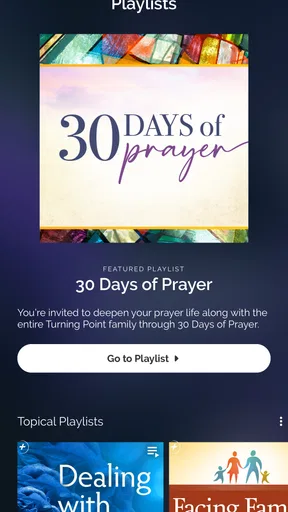
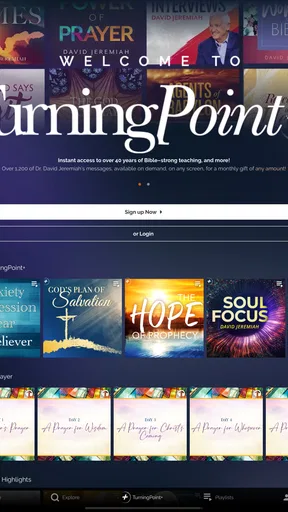
- Large library of sermons, studies, and devotional content.
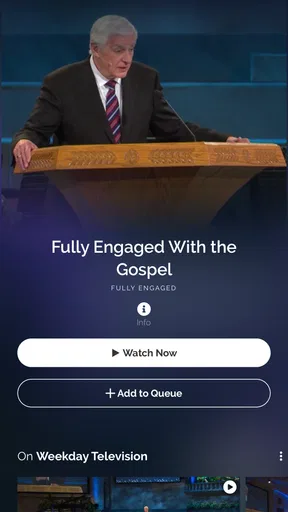
- Helpful access to Dr. David Jeremiah’s messages and broadcasts.
- Audio and video options support different listening preferences.
- Content is suitable for personal study, reflection, and encouragement.
Limitations of Turning Point Ministries
- Most content is aimed at Christian users and may feel narrow in scope.
- Some resources may require an internet connection to access fully.
- The app may offer limited interactive or community-focused features.
- Older devices could experience slower loading with video content.
- Users seeking diverse theological viewpoints may find the material limited.
Similar Picks in This Category
View All
SmartThings
Samsung Electronics Co., Ltd.4.6

Google Home
Google LLC4.0

Pinterest4.2

Astrotalk - Talk to Astrologer
Astrology & Horoscope4.7

My Verizon
Verizon Consumer Group4.5

Samsung Wallet (Samsung Pay)
Samsung Electronics Co., Ltd.4.1
Frequently Asked Questions
What is the Turning Point Ministries app?
Turning Point Ministries is a Christian media app connected with the teaching ministry of Dr. David Jeremiah. It gives users access to Bible-based sermons, devotionals, podcasts, television and radio programs, articles, and other faith-focused resources. The app is designed for people who want to study Scripture, listen to encouraging messages, and follow Turning Point content from a mobile device.
What content can I watch or listen to in Turning Point Ministries?
The app generally includes sermons, Bible teaching programs, podcasts, daily devotionals, inspirational messages, and other resources produced by Turning Point Ministries. Depending on the current catalog and your location, some content may be available as video, audio, or written material. Users can browse topics, discover recent broadcasts, and return to messages that support personal Bible study and reflection.
Is Turning Point Ministries free to download and use?
Turning Point Ministries can typically be downloaded without an upfront charge, allowing users to explore its available teaching and devotional resources. However, internet or mobile data charges may apply when streaming video or audio. Certain materials, donations, merchandise, or ministry-related services may involve separate transactions, so it is sensible to review the app store listing and any displayed terms before completing a purchase or contribution.
Does the app require an account or an internet connection?
Many of the app’s basic resources may be browsed without creating an account, but specific features can vary according to the current version. An internet connection is normally required for streaming sermons, podcasts, broadcasts, and other online media. If the app offers saved or offline content, availability may depend on the device, operating system, and the publisher’s current features.
Is Turning Point Ministries suitable for all Christian users?
Turning Point Ministries is primarily intended for Christians and anyone interested in evangelical Bible teaching. Its messages reflect the ministry’s theological perspective, so users may find the content especially relevant if they appreciate sermon-based study, devotional encouragement, and traditional Christian broadcasting. As with any religious app, people with different denominations or beliefs may want to review the ministry’s statement of faith and sample its content first.
